en es
Developing a Conservation Investment Strategy for the Tamaulipan Brushlands

Developing a Conservation Investment Strategy for the Tamaulipan Brushlands

As part of the RGJV plan to increase grassland conservation in the Tamaulipan Brushlands (TB) ecoregion, staff have been working on the initial steps to develop a TB Conservation Investment Strategy (CIS). In a nutshell the CIS could be defined as ‘an overarching, landscape–level strategy that is used by regional partners to help guide their grassland management and investment in south Texas and in NE Mexico’. More simply stated, the TB CIS will be a tool that can help partners to improve their ability to prioritize, implement, and evaluate conservation actions in the region. For this effort we decided to use Landscape Design: a stakeholder-driven conservation planning, management, and monitoring system developed by Playa Lakes JV that integrates landowner values with conservation values to achieve biological goals.

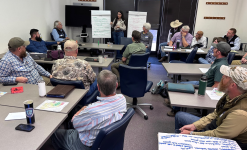
With these initial goals in mind we convened partners from the US and Mexico (federal, state, non-governmental, and academic stakeholders as well as a handful of landowners) to a workshop in Corpus Christi, TX last January to kick off the process. Throughout the meeting lively discussions provided valuable input that started shaping the CIS biological and social goals as well as the initial evaluation of the geographic scope, drivers, and social values of the region.

One of the most prominent takeaways from the meeting was that there is a real and urgent need to better understand what motivates landowners to participate in conservation programs and/or what limits their interest in those programs. Regarding next steps, staff will be working on the science component of the planning process to better define the biological goals as well as looking for opportunities to partner with experts that can help us address the missing and much-needed human dimensions component of the CIS.

RGJV Begins First Official Monitoring Season on South Texas Grassland Restoration Incentive Program

RGJV Begins First Official Monitoring Season on South Texas Grassland Restoration Incentive Program

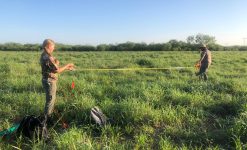
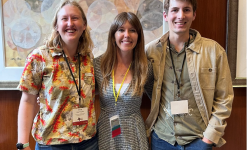
During the summer of 2022, Science Coordinator Rebekah Rylander kicked off the RGJV’s first official monitoring season on Grassland Restoration Incentive Program (GRIP) sites in the South Texas Plains ecoregion. To help with the task, three technicians were hired through American Bird Conservancy: Michael Trevino and Shaelyn Rainey focused on vegetation surveys using Grassland Effectiveness Monitoring (GEM) techniques, while Mary Tucker specialized in avian point count surveys. Altogether, technicians worked from mid-May through the end of June, collecting data at 14 treatment sites spread out across 9 counties. Though summer temperatures were grueling and regularly above 100° F, all three technicians did an outstanding job following protocols and representing the RGJV, while obtaining valuable field experience.

Though data cannot be statistically analyzed based on one year of data, the RGJV is preparing for its second monitoring season on south Texas GRIP treatment sites for the summer of 2023. Rebekah is hopeful that with multiple years of data, the RGJV can examine whether mechanical, chemical, and/or prescribed burning management techniques are successful in restoring south Texas pocket prairies for declining grassland-dependent avian communities. The RGJV is grateful to the National Fish and Wildlife Foundation and the Texas Parks and Wildlife Department for GRIP funding and for the continued positive participation of private landowners in south Texas GRIP, as restoration efforts would not be possible without their willingness to conserve critical habitat for wildlife.